UI vs UX: Decoding the Digital Design Duo for Pakistan’s Growing Tech Scene
Ever used an app like Foodpanda or Careem and thought, “Wow, this is so easy to use!” or perhaps, “This looks beautiful, but I can’t find what I need”? What you’re experiencing is the direct result of two critical, yet often confused, disciplines in digital design: User Interface (UI) and User Experience (UX).
In Pakistan’s booming digital landscape, businesses are quickly realizing that a great online presence is more than just having a website or an app. It’s about creating a digital experience that is both functional and delightful. That’s where UI and UX design come in. But what exactly is the difference? Are they the same thing? Can you have one without the other?
This guide will demystify the UI vs UX debate. We’ll break down each concept, explore their core differences, and explain why both are essential for any business in Pakistan looking to thrive online. Whether you’re a business owner, an aspiring designer, or just a curious tech enthusiast, this is for you.
What is User Experience (UX) Design? The Architect’s Blueprint
Think of building a house. Before you even think about paint colours or furniture, you need an architect. The architect plans the foundation, the number of rooms, how you’ll move from one room to another, and where the windows will go to get the best light. Their goal is to make the house logical, functional, and comfortable to live in. That, in essence, is User Experience (UX) design.
UX design is the invisible process of enhancing user satisfaction by improving the usability, accessibility, and pleasure provided in the interaction between the user and a product. It’s not about how it looks; it’s about how it feels and works.
Core Focus Areas of a UX Designer
- User Research: A UX designer’s journey begins with understanding the user. For the Pakistani market, this means understanding local languages, cultural nuances, internet accessibility, and common device types. They conduct surveys, interviews, and create user “personas” (fictional characters representing a target user) to guide their design decisions.
- Information Architecture (IA): This is the art of organizing and structuring content in a logical way. Think of the clear categories on Daraz—Men’s Fashion, Electronics, Groceries. A good IA ensures users can find what they’re looking for without getting frustrated.
- Wireframing: These are the basic skeletal outlines of a digital product. A wireframe is a low-fidelity, black-and-white blueprint that shows the layout of elements on a page. It focuses purely on structure and function, not on visual design.
- Prototyping & Testing: Before the final product is built, UX designers create interactive mockups (prototypes) to test the flow and functionality with real users. This helps identify and fix problems early, saving time and money. Is the checkout process too long? Is the “Book a Ride” button easy to find? Testing reveals all.
The Goal of UX: A Seamless Journey
The ultimate goal of UX is to solve a user’s problem. It answers the big questions: Is this product useful? Is it easy to navigate? Does it help me achieve my goal efficiently? A great UX is often invisible—you don’t notice it because everything just works as you expect it to.
What is User Interface (UI) Design? The Interior Decorator
If UX is the architectural blueprint of the house, User Interface (UI) design is the interior decorator. It’s everything you see and interact with: the colour of the walls, the style of the furniture, the placement of the light switches, and the texture of the curtains. UI brings the functional blueprint to life with an aesthetically pleasing and interactive layer.
UI design is the visual part of the user’s journey. It focuses on the look and feel, the presentation, and the interactivity of a product. It’s about crafting the visual elements that users touch, click, and see.
Core Focus Areas of a UI Designer
- Visual Design: This is the most obvious part of UI. It includes choosing colour palettes, typography (fonts), and imagery that align with the brand’s identity. For a brand in Pakistan, this might mean using colours and visuals that resonate with the local culture.
- Layout and Spacing: UI designers are meticulous about how elements are arranged on a screen. Proper use of grids, alignment, and white space ensures the interface is clean, uncluttered, and easy to scan.
- Interactive Elements: Every button, slider, icon, and form field you interact with has been designed by a UI designer. They ensure these elements are not only beautiful but also clear in their function and provide feedback (e.g., a button changing colour when you press it).
- Design Systems and Consistency: To ensure a cohesive experience, UI designers create style guides and design systems. This is a rulebook for all visual elements, ensuring that a button looks and behaves the same way across the entire app or website, which builds trust and familiarity for the user.
The Goal of UI: An Intuitive Destination
The goal of UI is to create a visually compelling and intuitive interface that guides the user through the UX-defined journey. It makes the functional experience beautiful and engaging. While UX makes a product useful, UI makes it delightful to use.
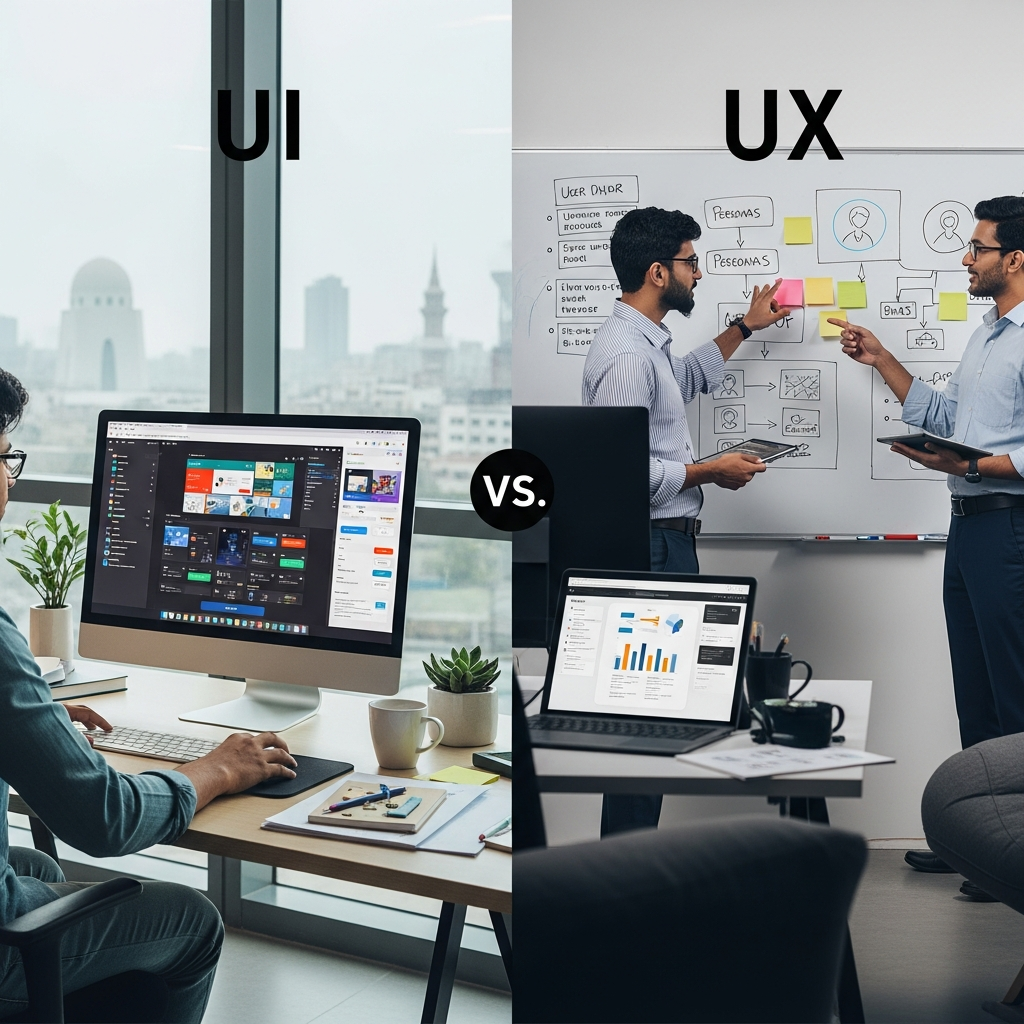
UI vs. UX: A Head-to-Head Comparison
While UI and UX are deeply intertwined, their focus and processes are distinct. Here’s a simple breakdown to highlight the core differences:
| Aspect | User Experience (UX) | User Interface (UI) |
|---|---|---|
| Focus | The overall journey and feeling. Problem-solving. | The visual appearance and interactivity. Presentation. |
| Analogy | The foundation and structure of a house. | The paint, furniture, and decorations of the house. |
| Answers the Question… | “How does it work?” and “Why should I use it?” | “How does it look?” and “How do I interact with it?” |
| Process Order | Comes first. Research and structure are defined before visuals. | Comes second. Visuals are applied to the UX framework. |
| Key Deliverables | User personas, wireframes, user flow diagrams, prototypes. | Mockups, style guides, design systems, interactive animations. |
| Common Tools | Miro, Figma (for wireframing), UserTesting.com, SurveyMonkey. | Figma, Sketch, Adobe XD, Photoshop, Illustrator. |
Why Both Are Crucial for Business Success in Pakistan
Imagine a beautifully designed restaurant (great UI) where the service is slow, the tables are cramped, and it’s hard to get the waiter’s attention (bad UX). You probably wouldn’t go back. Conversely, imagine a restaurant with amazing service and a logical layout (great UX) but with peeling paint, uncomfortable chairs, and dim lighting (bad UI). The experience would still feel incomplete.
In the highly competitive Pakistani digital market, you need both to succeed.
- Good UX builds loyalty. When an app or website is easy to use and solves a problem effectively, users will return. A seamless checkout process on an e-commerce site leads to more sales.
- Good UI builds trust. A professional, modern, and consistent visual design makes a business look credible and trustworthy. Users are more likely to input their personal and payment information on a site that looks polished and secure.
A product that works well (UX) and looks great (UI) creates a powerful combination that captures users’ attention, earns their trust, and keeps them coming back. This synergy is the key to driving conversions, increasing customer retention, and building a strong brand identity.
FAQ: Your UI/UX Questions Answered
1. Can one person be both a UI and a UX designer?
Yes, especially in smaller companies or startups. This role is often called a “UI/UX Designer” or “Product Designer.” While one person can handle both, the roles require different skill sets. UX is more analytical and research-driven, while UI is more focused on visual creativity and graphic design. Larger companies often have separate, dedicated teams for each.
2. For a startup in Pakistan, which is more important: UI or UX?
Both are vital, but you should always start with UX. A product that looks beautiful but doesn’t solve a user’s problem or is confusing to use will fail. First, ensure your product is functional, valuable, and easy to navigate (UX). Once you have a solid foundation, you can apply a beautiful interface (UI) to enhance the experience. A Minimum Viable Product (MVP) should prioritize core UX functionality above all else.
3. What are some good tools for beginners to learn UI/UX?
Figma is the industry standard today and is fantastic for both UI and UX design. It’s collaborative, web-based, and has a generous free plan, making it perfect for beginners. For UX research and brainstorming, tools like Miro (digital whiteboarding) are excellent. The best way to learn is by practicing: try redesigning a popular local app or creating a new concept from scratch.
4. Do I need to know how to code to be a UI/UX designer?
No, you do not need to be a coder. However, having a basic understanding of how websites and apps are built (HTML, CSS, and JavaScript basics) is extremely helpful. It allows you to design solutions that are technically feasible and communicate more effectively with developers, which is a highly valued skill in the industry.
5. How is the UI/UX job market in Pakistan?
The UI/UX job market in Pakistan is growing rapidly. As more businesses go digital, from banks and e-commerce giants to tech startups, the demand for skilled designers who can create world-class user experiences is at an all-time high. It’s an excellent career path with significant growth potential for those willing to learn and adapt.
Conclusion: Crafting Experiences, Not Just Interfaces
Understanding the difference between UI and UX is no longer just for designers—it’s essential for anyone involved in creating digital products. UX is the strategic thinking that makes a product useful and usable, while UI is the creative execution that makes it beautiful and interactive. They are not opposing forces; they are partners in the dance of great design.
As Pakistan’s digital journey continues to accelerate, the brands that will win are those that invest in both a solid architectural plan and a stunning exterior. They are the ones that understand they aren’t just building an app or a website; they are building an experience.
At Bloom & Brew, we believe that exceptional design is the heart of digital success. We specialize in creating digital experiences that are not only visually stunning (UI) but also strategically crafted to meet user needs and achieve business goals (UX). If you’re looking to elevate your brand’s digital presence in Pakistan or beyond, let’s connect. We help businesses bloom by brewing digital solutions that truly resonate.