Introduction
Graphic design, in its essence, is the art of communication through visuals. It has come a long way from the days of hand-drawn illustrations and print-only media. Today, graphic design is a dynamic and ever-evolving field that encompasses digital art, user experience design, branding, and much more. In this article, we will embark on a journey through the evolution of graphic design, exploring its past, assessing its present, and speculating about its future.
The Past: From Hand-Painted Signs to Print Design
The origins of graphic design can be traced back to ancient civilizations, where symbols and images were used to communicate ideas. However, the true birth of modern graphic design can be attributed to the invention of the printing press by Johannes Gutenberg in the 15th century. This innovation paved the way for mass communication through printed materials such as books, posters, and newspapers.
During the 19th and early 20th centuries, graphic design saw a surge in creativity and experimentation. Art movements like Art Nouveau and the Bauhaus school played a significant role in shaping the aesthetics of the time. Posters, packaging, and magazine covers became the canvas for graphic designers to showcase their skills.
The Present: Digital Dominance and Multidisciplinary Design
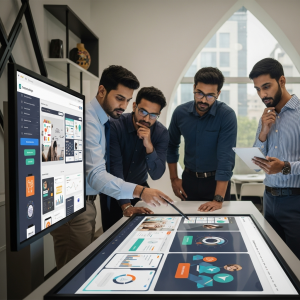
In the digital age, graphic design has transitioned into a predominantly digital field. The advent of computers and design software revolutionized the way designers work, making it more accessible and efficient. Today, graphic designers use powerful software like Adobe Creative Suite, CorelDRAW, and various online tools to create everything from logos and websites to social media graphics.
The present-day graphic designer wears many hats. They are not just responsible for creating visually appealing designs but also for ensuring a seamless user experience. User interface (UI) and user experience (UX) design are now integral components of graphic design, with an emphasis on creating intuitive and engaging digital experiences.
Furthermore, the rise of social media has led to the need for quick and attention-grabbing visuals. Infographics, GIFs, and short video content have become popular formats for conveying information in a visually compelling way.
The Future: Beyond Screens and AI Integration
As we gaze into the crystal ball of graphic design’s future, several trends and possibilities emerge. Augmented reality (AR) and virtual reality (VR) are expected to play a more prominent role, with designers creating immersive and interactive experiences for users. Imagine trying out furniture in your living room before making a purchase, all through AR-powered graphics.
Artificial intelligence (AI) is another game-changer on the horizon. AI can assist designers in automating repetitive tasks, analyzing data for design insights, and even generating design concepts. However, it’s crucial to strike a balance between AI and human creativity to maintain the authenticity and emotional appeal of design.
Sustainability is a growing concern in the design world. Designers are increasingly adopting eco-friendly practices by choosing sustainable materials, reducing waste, and creating designs that promote environmental awareness.
The future of graphic design is likely to be a fusion of technology, sustainability, and creativity, with designers pushing boundaries and challenging traditional norms.
Conclusion
The evolution of graphic design has been a journey from the printing press to the digital age, with constant innovation and adaptation along the way. Today’s graphic designers are versatile, multidisciplinary professionals who harness technology and creativity to communicate messages effectively.
Looking ahead, the future promises even more exciting possibilities, from augmented reality experiences to AI-powered design assistance. As the graphic design landscape continues to evolve, one thing remains certain: graphic designers will always be at the forefront of visual storytelling and communication, shaping the way we perceive and interact with the world around us.