From Clicks to Customers: How to Skyrocket Your Product Page Conversions in Pakistan
You’ve done the hard work. You’ve driven traffic to your online store through savvy social media campaigns, targeted ads, and excellent SEO. Visitors are flooding your website, and your analytics show a healthy number of clicks on your products. But there’s a problem: your sales figures don’t match the traffic. This frustrating gap between interest and purchase often comes down to one critical element of your e-commerce ecosystem – the product page.
In the competitive Pakistani e-commerce market, a product page is more than just a digital catalogue entry; it’s your virtual salesperson. It’s where a potential buyer decides whether to click “Add to Cart” or hit the back button. Optimizing this single page can be the most impactful change you make to boost your revenue. This guide will walk you through actionable strategies, tailored for the Pakistani audience, to transform your product pages from mere showcases into powerful conversion machines.
The Foundation: Understanding Your Pakistani Customer
Before you change a single button or rewrite a line of copy, you must understand who you’re selling to. The Pakistani consumer is unique, with specific expectations, concerns, and purchasing habits. Skipping this step is like trying to sell winter jackets in Karachi in July – it just won’t work.
Conduct Market Research & Define Your Buyer Persona
Who is your ideal customer? Are they a university student in Lahore looking for trendy, affordable fashion? A busy mother in Islamabad searching for organic baby products? Or a tech enthusiast in Karachi wanting the latest gadgets? Create a detailed buyer persona that includes:
- Demographics: Age, gender, location, income level, education.
- Psychographics: Values, interests, lifestyle, pain points.
- Online Behaviour: Which social media platforms do they use? Are they price-sensitive? Do they read reviews extensively before buying?
Understanding these details will inform every decision you make, from the tone of your copy to the type of images you use.
Analyse User Behaviour with Analytics and Heatmaps
Data is your best friend. Use tools like Google Analytics to understand how users interact with your product pages. Look at metrics like bounce rate, time on page, and exit pages. A high bounce rate could indicate that your page isn’t meeting expectations or is loading too slowly.
Go a step further with heatmap tools like Hotjar or Crazy Egg. These tools visually represent where users click, move their mouse, and how far they scroll. You might discover that customers aren’t seeing your call-to-action button or are trying to click on a non-clickable image. These insights are pure gold for identifying friction points.
Crafting Compelling Product Visuals That Convert
In e-commerce, customers can’t touch, feel, or try on your product. Your visuals must do all the heavy lifting to bridge this sensory gap. For the Pakistani market, where trust is built visually, this is non-negotiable.
High-Quality Images are a Must
Blurry, low-resolution, or poorly lit photos scream “unprofessional” and erode trust. Invest in professional photography or learn the basics of good product photography yourself. Your images should:
- Be high-resolution and sharp.
- Show the product from multiple angles.
- Include in-context shots (e.g., a dress being worn, a coffee maker on a kitchen counter).
- Feature a zoom function so customers can inspect details.
- Be consistent in style and branding across your store.
Leverage Product Videos and 360° Views
Video is an incredibly powerful conversion tool. A short video demonstrating your product in action can answer questions and build desire in a way static images can’t. Show how to assemble a piece of furniture, the flow of a fabric, or the user interface of a gadget. A 360° view gives customers a near-tangible experience, allowing them to explore the product from every angle, significantly boosting confidence.
Optimise Images for Speed
While high-quality visuals are crucial, they can’t come at the cost of page speed. Internet speeds can be inconsistent across Pakistan, and a slow-loading page is a top reason for abandonment. Use tools like TinyPNG to compress your images without sacrificing too much quality. Ensure your images are saved in next-gen formats like WebP and are properly sized for the web. A page that loads in under 3 seconds is your goal.
Writing Product Descriptions That Sell
Your images attract the eye, but your words convince the mind. A great product description doesn’t just list features; it tells a story and sells a solution.
Go Beyond Specs: Focus on Benefits
Instead of just listing “100% Cotton,” explain the benefit: “Made from 100% pure, breathable cotton to keep you cool and comfortable during Pakistan’s warm summer months.” Connect every feature to a benefit that solves a problem or fulfils a desire for your target customer.
Use Clear, Concise, and Persuasive Language
Write for your audience. Avoid overly technical jargon unless you’re selling to a niche of experts. Use strong, persuasive verbs and sensory words that help the customer imagine themselves using the product. While your main copy should be in professional English, don’t be afraid to use simple language. The goal is clarity, not complexity.
Structure with Bullet Points and Scannable Text
Online shoppers don’t read; they scan. Break up long paragraphs. Use a compelling opening sentence or two, followed by a bulleted list of key features and benefits. This makes your information easy to digest, especially on mobile screens. Use bold text to highlight important information.
Building Trust and Credibility: The E-commerce Holy Grail
In a market where online shopping is still maturing, trust is the most valuable currency. Your product page must be a fortress of credibility.
The Power of Social Proof: Reviews and Testimonials
Customers trust other customers. Actively encourage buyers to leave reviews. Display star ratings prominently near the product title. Feature detailed testimonials that address common concerns. A study by Nielsen shows that 92% of people will trust a recommendation from a peer. User-generated photos or reviews are even more powerful as they provide authentic social proof.
Display Trust Badges and Security Seals
Visually reassure your customers that their purchase is safe. Prominently display logos of your payment partners (e.g., Visa, Mastercard, EasyPaisa, JazzCash) and security seals (like SSL certificates). This simple visual cue can significantly reduce cart abandonment caused by security concerns.
Be Transparent with Pricing and Shipping
Hidden costs are a major conversion killer. Be upfront about everything. Display the price clearly in PKR. If there are shipping charges, state them clearly on the product page or have an easy-to-use shipping calculator. Mention your return policy and delivery timeline. In Pakistan, clearly stating “Cash on Delivery (COD) Available” is a massive trust signal and an absolute must-have for most businesses.
Optimizing the User Experience (UX) for Effortless Shopping
A confusing or clunky user experience will send customers running to your competitors. The goal is to make the path from discovery to purchase as smooth and intuitive as possible.
A Clear and Prominent Call-to-Action (CTA)
Your “Add to Cart” or “Buy Now” button should be impossible to miss. Use a contrasting colour that stands out from the rest of the page. The text should be clear and action-oriented. Place it “above the fold” so users don’t have to scroll to find it.
Mobile-First Design is Essential
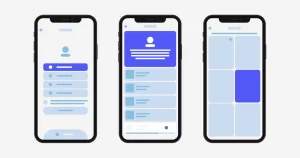
The majority of online shoppers in Pakistan browse and buy on their smartphones. Your product page must be fully responsive and optimized for a mobile experience. This means large, tappable buttons, legible font sizes, and a simple, uncluttered layout. Test your pages on various mobile devices to ensure a seamless experience for everyone.
Leverage Scarcity and Urgency
Ethically used, scarcity and urgency can be powerful psychological triggers. Phrases like “Only 3 left in stock!” or a countdown timer for a special sale (“Offer ends in 02:15:35”) can encourage hesitant buyers to make a decision. This taps into the Fear Of Missing Out (FOMO) and can give your conversion rate a healthy nudge.
Offer Live Chat and WhatsApp Support
Pakistani consumers often have questions before making a purchase and appreciate direct communication. Integrating a live chat feature or a prominent WhatsApp button allows you to answer queries in real-time, clarify doubts about sizing or delivery, and guide customers through their purchase. This personal touch builds immense trust and can often be the final push a customer needs to convert.
Conclusion: Your Journey to Higher Conversions Starts Now
Improving your product page conversions isn’t a one-time fix; it’s an ongoing process of understanding, testing, and refining. Start by building a solid foundation of customer understanding. Then, focus on creating a compelling visual and written presentation of your product. Build layers of trust through social proof and transparency, and wrap it all in a seamless, mobile-first user experience.
By implementing these strategies tailored for the Pakistani market, you can transform your product pages from passive listings into active, high-performing sales assets that turn curious visitors into loyal customers.
Feeling a bit overwhelmed? Optimizing your digital storefront is a journey. If you’re looking for a partner to help you navigate the complexities of the Pakistani e-commerce landscape and brew up some serious growth, the team at Bloom & Brew is here to help. Reach out to us for a friendly chat about your business.
Frequently Asked Questions (FAQ)
1. What is a good conversion rate for an e-commerce store in Pakistan?
A good conversion rate can vary wildly by industry, product price, and traffic source. However, a general benchmark for e-commerce stores in Pakistan is typically between 0.5% to 2%. Instead of focusing on a universal number, it’s more productive to benchmark against your own past performance and aim for continuous improvement.
2. Is Cash on Delivery (COD) still necessary for online stores in Pakistan?
Absolutely. While digital payments are on the rise, a significant portion of the population still prefers or relies on COD due to trust issues, lack of bank accounts, or simply habit. Not offering COD can alienate a large segment of potential customers and severely limit your conversion potential. It’s a critical trust-builder in the Pakistani market.
3. How many product images should I have on my page?
There’s no magic number, but aim for at least 5-8 high-quality images. This should include photos of the product from different angles, a close-up of the texture or key details, an in-context or lifestyle shot showing the product in use, and an image showing the scale or size of the product.
4. My product pages get traffic but no sales. What’s the first thing I should check?
Start with the basics. First, check your page loading speed, especially on mobile. A slow page is a huge conversion killer. Second, look at your call-to-action (CTA). Is it clear, visible, and compelling? Third, check for trust signals. Are your reviews, security badges, and return policy clearly visible? Often, the issue lies in one of these fundamental areas.
5. How can I get more customer reviews for my products?
Make it easy and rewarding. Send a follow-up email or WhatsApp message a week or two after the product has been delivered, politely asking for a review. You can incentivize them by offering a small discount on their next purchase or entry into a prize draw. The key is to ask at the right time and make the process as simple as possible.