Custom Website vs. Template: The Ultimate Guide for Pakistani Businesses
In today’s digital-first Pakistan, having a website isn’t just an option—it’s a necessity. Your website is your digital storefront, your 24/7 salesperson, and the central hub for your brand’s story. But as you embark on this exciting journey, you’ll face a crucial decision right at the start: should you opt for a quick-and-easy template or invest in a tailor-made custom website?
This is more than just a technical choice; it’s a strategic business decision that will impact your branding, scalability, and long-term growth. Many Pakistani entrepreneurs and business owners find themselves at this crossroads, weighing the immediate costs against future potential. One path offers speed and affordability, while the other promises uniqueness and limitless possibilities.
At Bloom & Brew, we’ve guided countless businesses across Pakistan—from bustling Karachi startups to established Lahore enterprises—through this very decision. In this comprehensive guide, we’ll break down the pros and cons of both custom and template websites, helping you choose the perfect fit for your unique business goals.
Understanding the Basics: What’s the Real Difference?
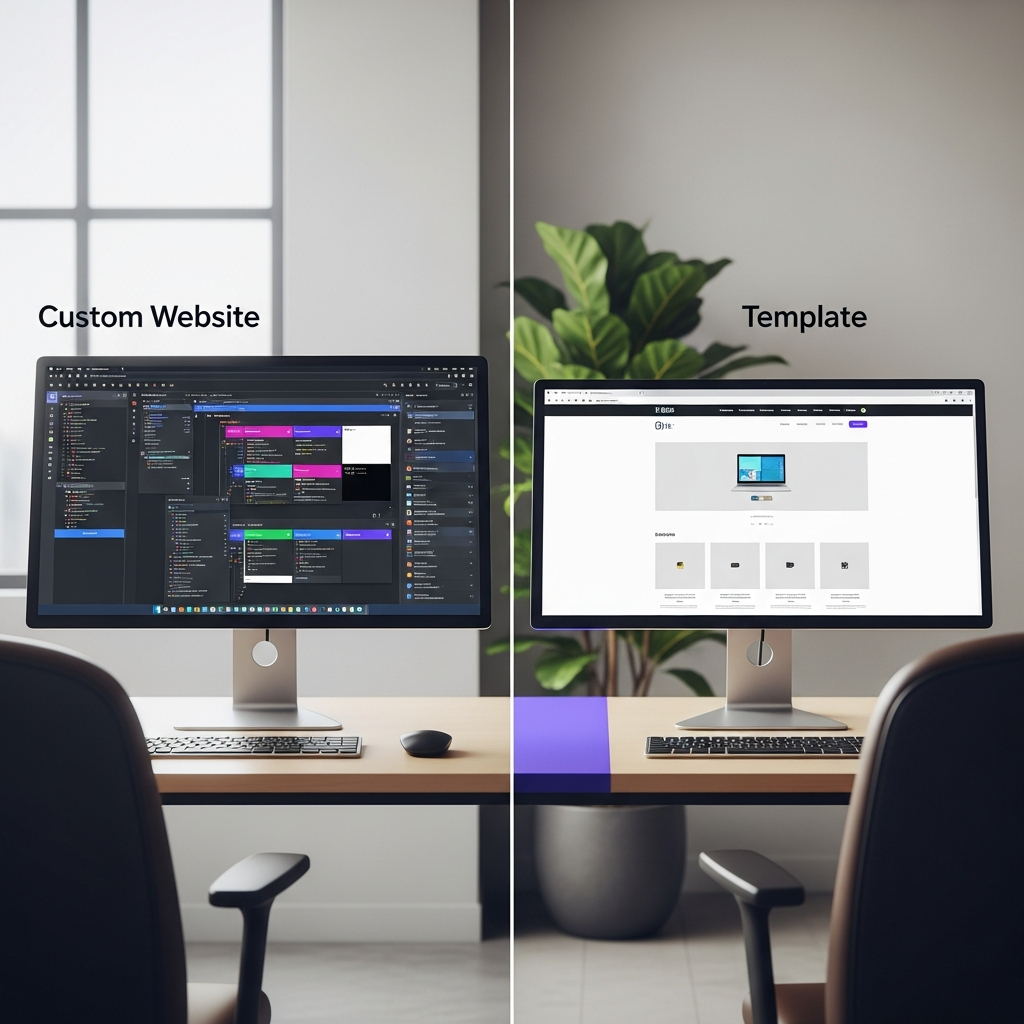
Before we dive into a head-to-head comparison, let’s clarify what we mean by “template” and “custom.” Think of it like buying a suit. You can either buy one off-the-rack or have one tailored specifically for you.
What is a Template Website?
A template website is built using a pre-designed, pre-coded layout. These are the “off-the-rack” suits of the web world. You choose a design you like, add your own content (text, images, logo), and make minor cosmetic changes like adjusting colours and fonts. It’s a faster, more affordable way to get online.
Popular platforms that use templates include:
- WordPress Themes: A massive marketplace of themes from sites like ThemeForest or Elegant Themes.
- Shopify: A leading e-commerce platform with a variety of free and paid themes for online stores.
- Wix & Squarespace: All-in-one website builders that offer a drag-and-drop interface with a library of templates.
Think of it like renting a beautifully furnished apartment in a modern complex. It’s ready to move into, looks great, and has all the standard amenities. However, you can’t knock down walls or change the fundamental layout.
What is a Custom Website?
A custom website is the “bespoke suit”—designed and developed from scratch exclusively for your business. The process begins not with a pre-made design, but with a deep dive into your business goals, target audience, brand identity, and operational needs. Every single element, from the user journey to the backend functionality, is crafted to meet your specific requirements.
This process involves a dedicated team of UX/UI designers, developers, and project managers. The result is a unique, high-performance digital asset that is truly one-of-a-kind. It’s like hiring an architect and a builder to construct your dream home. You decide on the blueprint, the materials, and every single detail to ensure it perfectly matches your vision and lifestyle.
The Great Debate: A Head-to-Head Comparison for the Pakistani Market
Now that we understand the core difference, let’s compare them across the factors that matter most to businesses in Pakistan.
Cost & Budget: The Rupee Factor
Template Websites: The most significant advantage of a template is the lower upfront cost. A premium theme might cost anywhere from 10,000 to 25,000 PKR. For a startup or a small business in Pakistan with a tight budget, this is incredibly appealing. However, beware of hidden costs. You might need to purchase premium plugins for added functionality, hire a developer for small customizations, or pay ongoing subscription fees, which can add up over time.
Custom Websites: A custom build is a significant investment. The cost is higher because you are paying for the dedicated time and expertise of a professional team to plan, design, and code your website from the ground up. While the initial outlay is more, a custom website should be viewed as a long-term capital investment, much like buying your own office space. It’s an asset that is built to generate returns through better user experience, stronger branding, and superior performance.
Time to Launch: How Quickly Can You Go Live?
Template Websites: Speed is the name of the game here. Since the design and core structure are already built, the development timeline is much shorter. A simple template-based website can be launched in a matter of weeks. This is ideal for businesses that need to establish an online presence quickly—for instance, a new restaurant in Islamabad wanting to post its menu online or a local event needing a registration page.
Custom Websites: Craftsmanship takes time. A custom website project follows a meticulous process of strategy, design, development, testing, and deployment. This typically takes several months. This longer timeline allows for a strategic approach, ensuring that every aspect of the website is perfectly aligned with your business objectives before it goes live.
Design & Branding: Standing Out in a Crowded Market
Template Websites: While templates can look professional, they offer limited uniqueness. Since thousands of other businesses might be using the same theme, you run the risk of looking generic. It can be challenging to make your brand truly stand out when you’re confined by a pre-set layout. Forcing your unique brand identity into a rigid template can feel like trying to fit a square peg in a round hole.
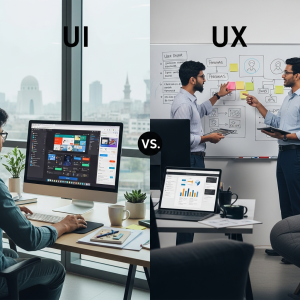
Custom Websites: This is where custom development truly shines. You have complete creative freedom. The design is built around your brand, not the other way around. From a unique user interface (UI) that reflects your brand’s personality to a seamless user experience (UX) that guides customers effortlessly, a custom design ensures your business leaves a memorable impression on your Pakistani audience.
Functionality & Features: Built for Your Business Process
Template Websites: Functionality is often limited to what the template offers or what can be added via plugins. While there’s a plugin for almost everything on platforms like WordPress, relying too heavily on them can lead to site bloat, slower loading times, and security vulnerabilities. If you have a unique business process—like a specialized booking system for a Northern Areas tour company or a complex quoting tool for a manufacturing firm—a template may not be able to accommodate it.
Custom Websites: The possibilities are limitless. Need to integrate with a specific local payment gateway like Easypaisa or a Pakistani logistics provider like TCS? Need a custom client portal or a complex product configurator? With a custom build, functionality is developed specifically to solve your business challenges and streamline your operations. The website works for your business, not the other way around.
SEO & Performance: Ranking on Google.com.pk
Template Websites: Many modern themes claim to be “SEO-friendly.” While they often include basic SEO features, they can also be bloated with unnecessary code and scripts that slow down your site. Page speed is a critical ranking factor for Google, and a slow, clunky theme can harm your visibility in local search results.
Custom Websites: Performance is a priority from day one. Developers build custom sites with clean, lean, and optimized code. This results in faster loading times, better mobile performance, and a solid technical SEO foundation. You have complete control over the site structure, code, and on-page elements, giving you a significant advantage in climbing the search engine rankings and attracting more organic traffic.
Scalability & Future Growth
Template Websites: A template can serve you well when you’re starting out. But as your business grows, the template’s limitations can become a major bottleneck. Adding significant new features or fundamentally changing the user journey might require you to scrap the site and start over.
Custom Websites: A custom site is built to grow with you. The architecture is designed with scalability in mind, making it much easier to add new features, expand into new product lines, or integrate new technologies in the future. It’s a flexible foundation that adapts to your evolving business needs, ensuring your initial investment continues to pay dividends for years to come.
Quick Decision Guide: Which Path is Right for You?
To make it even simpler, here’s a quick summary to help you decide.
Choose a Template Website if:
- You are a new startup, a freelancer, or a very small business.
- Your budget is extremely limited.
- You need to get online as quickly as possible.
- Your needs are simple (e.g., a basic informational site, a portfolio, or a simple blog).
- You don’t have unique functionality requirements.
Choose a Custom Website if:
- You are an established business or a well-funded startup aiming for serious growth.
- You see your website as a core long-term business asset.
- Your brand identity is unique and a key differentiator.
- You require specific features or integrations with other software.
- You are serious about SEO, performance, and providing an exceptional user experience.
- You need a website that can scale as your business expands.
The Bloom & Brew Perspective
At Bloom & Brew, we believe that the right choice depends entirely on your specific context. A template can be a fantastic starting point for a new venture finding its feet. However, for businesses serious about building a strong, competitive, and lasting online presence in the Pakistani market, a custom website is an unparalleled investment.
Our passion lies in crafting digital experiences that are not only beautiful but also strategically engineered to drive results. We work closely with our clients to understand their business inside and out, allowing us to build custom web solutions that solve real problems, engage customers, and fuel growth.
Feeling unsure about which path is right for your business? Let’s have a chat. We can help you evaluate your needs and map out a digital strategy that aligns with your budget and vision. Contact Bloom & Brew today for a free, no-obligation consultation and let’s build something amazing together.
Frequently Asked Questions (FAQs)
1. How much does a website cost in Pakistan?
The cost varies dramatically. A simple website using a pre-made template can range from 30,000 to 100,000 PKR, depending on the level of customization and content entry. A professional custom-built website is a more significant investment, typically starting from 250,000 PKR and going up into the millions for complex platforms like large-scale e-commerce or custom web applications.
2. Can a template website rank well on Google?
Yes, it’s possible. A well-chosen, lightweight template combined with high-quality content and a solid off-page SEO strategy can certainly rank. However, custom websites have an inherent advantage due to their clean code, superior page speed, and tailored user experience, which are all crucial factors for modern SEO.
3. What if I start with a template and want to move to a custom site later?
This is a very common growth path for businesses. However, it’s important to understand that this is not a simple “upgrade.” Moving from a template to a custom site involves a complete rebuild from scratch. Your content, data, and SEO authority can be migrated, but the underlying design and code will be entirely new.
4. Are template websites secure?
Security depends on the platform and how it’s managed. Platforms like Shopify and Squarespace manage security for you. With WordPress, security is a shared responsibility; you must keep your theme, plugins, and core software updated to protect against vulnerabilities. A custom website gives you more control, allowing for tailored security measures and protocols specific to your application’s needs.
5. What technologies do you use for custom development at Bloom & Brew?
We believe in using the best tool for the job. Our team is proficient in a range of modern technologies. For front-end development, we often use frameworks like React.js for dynamic user interfaces. For the back-end, we leverage robust solutions like Laravel (a PHP framework) or Node.js. For content-heavy sites, we might build a custom theme on WordPress or use a headless CMS for maximum flexibility and performance.