Ecommerce Website Development: Your Complete Beginner’s Guide for Pakistan
The digital marketplace in Pakistan is buzzing with energy. From bustling cities like Karachi and Lahore to smaller towns, more Pakistanis are shopping online than ever before. For entrepreneurs and established businesses, this shift isn’t just a trend; it’s a golden opportunity. Launching an e-commerce website is no longer a luxury but a fundamental step towards growth, reach, and success. But where do you begin?
The idea of building an online store can feel daunting. You’re faced with questions about platforms, payments, design, and logistics. This comprehensive guide is designed to demystify the process. We’ll walk you through every stage of e-commerce website development, specifically tailored for the Pakistani market, turning your ambition into a thriving online business.
Why Your Business in Pakistan Needs an Ecommerce Website
Before diving into the “how,” let’s solidify the “why.” A physical storefront has its limits, but a digital one opens up a world of possibilities.
- Reach a Nationwide Audience: Your customer base is no longer restricted to your city. An e-commerce site allows you to sell your products to anyone, anywhere in Pakistan, from Khyber to Karachi.
- Operate 24/7: Your online store never closes. Customers can browse and buy at their convenience, whether it’s early in the morning or late at night, significantly increasing your sales potential.
- Build a Stronger Brand: A professional website is your digital headquarters. It allows you to tell your brand’s story, showcase your products beautifully, and build direct relationships with your customers, fostering trust and loyalty.
- Gain Valuable Customer Insights: Digital platforms provide a wealth of data. You can track best-selling products, understand customer behavior, and see which marketing campaigns are working, allowing you to make smarter, data-driven business decisions.
- Lower Operational Costs: Compared to a brick-and-mortar store, an online business often has lower overheads related to rent, utilities, and staffing, allowing you to invest more in product quality and marketing.
Getting Started: The Pre-Development Checklist
Proper planning is the foundation of a successful online store. Before you write a single line of code or choose a template, take the time to lay the groundwork with this essential checklist.
Define Your Niche and Target Audience
Who are you selling to? What problem are you solving? A generic store trying to sell everything to everyone rarely succeeds. Identify a specific niche. Are you selling handcrafted leather goods, organic skincare, or modern home decor? Understanding your target audience—their age, interests, and online habits—will inform everything from your website design to your marketing language.
Choose a Business Name and Domain
Your name is your identity. Choose something memorable, easy to spell, and relevant to your products. Once you have a name, secure your domain name immediately. For businesses targeting Pakistan, a .com.pk or .pk domain can build local trust. However, a universal .com is also an excellent choice, especially if you have future plans for international expansion. Use a domain registrar to check for availability and purchase your chosen name.
Plan Your Product Catalog and Photography
Your products are the stars of the show. Organize them into logical categories and subcategories. Write compelling, detailed product descriptions that highlight features and benefits. Most importantly, invest in high-quality product photography. Clear, well-lit images from multiple angles are non-negotiable in e-commerce. In a market where customers can’t physically touch the product, your photos do the heavy lifting in making the sale.
Understand Your Budget
Be realistic about your budget. The cost of an e-commerce website can vary drastically. Key expenses include the domain name, hosting, platform fees (if any), theme/template costs, payment gateway integration, and potentially professional development or design fees. Having a clear budget will help you choose the right platform and tools without overspending.
Choosing the Right Ecommerce Platform
Your e-commerce platform is the engine of your online store. It’s the software that allows you to build your site, manage products, accept payments, and process orders. The two main categories are hosted and self-hosted platforms.
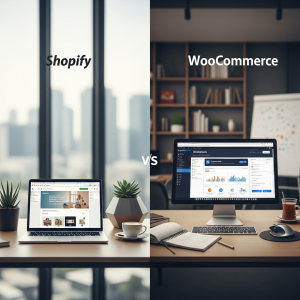
Hosted Platforms (SaaS): Shopify
Hosted platforms, also known as Software-as-a-Service (SaaS), handle all the technical aspects for you. You pay a monthly fee for an all-in-one solution that includes hosting, security, and support.
- Example: Shopify is a global leader and incredibly popular in Pakistan for its ease of use.
- Pros: User-friendly interface, excellent customer support, built-in security, and a wide variety of professional themes and apps. It’s perfect for beginners who want to launch quickly without technical headaches.
- Cons: Less customization control compared to self-hosted options. Monthly subscription fees and transaction fees on payments can add up over time.
Self-Hosted Platforms (Open-Source): WooCommerce
Self-hosted platforms are open-source software that you install on your own web hosting. This gives you complete control and flexibility over every aspect of your store.
- Example: WooCommerce, a plugin that transforms any WordPress website into a powerful online store.
- Pros: Unmatched flexibility and customization. You own your data and have full control. There are no monthly platform fees (you only pay for hosting), and a massive community provides countless themes and plugins.
- Cons: Requires more technical know-how. You are responsible for your own hosting, security, maintenance, and updates, which can be challenging for beginners.
Which Platform is Right for Your Pakistani Business?
If you’re a beginner focused on getting to market quickly with a beautiful, reliable store, Shopify is an excellent choice. If you already have a WordPress site, want ultimate control over customization, and are comfortable with a steeper learning curve, WooCommerce is a fantastic and cost-effective option.
Essential Features Every Ecommerce Website Needs
Regardless of the platform you choose, your online store must have certain key features to provide a great customer experience and drive sales.
User-Friendly Navigation and Design
Your website’s design should be clean, professional, and easy to navigate. A cluttered or confusing site will drive customers away. Ensure you have a prominent search bar, clear product categories, and a straightforward menu. Your branding—logo, colours, and fonts—should be consistent throughout the site.
High-Quality Product Pages
This is where the sale happens. Each product page must include multiple high-resolution images, a zoom function, detailed and persuasive descriptions, clear pricing, and customer reviews or ratings. Social proof from other buyers is incredibly powerful in building trust.
Secure and Simple Checkout Process
A complicated checkout is the number one reason for abandoned carts. Make your process as simple as possible—ideally one page. Display trust seals, offer guest checkout, and be transparent about all costs, including shipping fees. Ensure your entire site, especially the checkout, is secured with an SSL certificate (https://).
Mobile Responsiveness
A significant majority of online traffic in Pakistan comes from mobile devices. Your website *must* look and function perfectly on smartphones and tablets. A non-responsive design is no longer an option; it’s a business-killer. Test your site thoroughly on different screen sizes to ensure a smooth mobile shopping experience.
Setting Up Payments and Shipping for Pakistan
This is where local knowledge is crucial. Integrating payment and shipping solutions that Pakistani customers trust and prefer is vital for success.
Integrating Local Payment Gateways
You need to offer a mix of payment options to cater to everyone.
- Cash on Delivery (COD): This is non-negotiable. COD remains the most popular payment method in Pakistan due to trust and accessibility. Nearly all local courier companies offer COD services.
- Mobile Wallets: The use of mobile wallets is skyrocketing. Integrating JazzCash and EasyPaisa is a must to capture a large segment of the market.
- Credit/Debit Cards: While less common than COD, offering card payments via gateways like Stripe or local providers like Paymob is essential for catering to a growing segment of tech-savvy shoppers.
Logistics and Shipping Solutions
Reliable delivery is key to customer satisfaction. Partner with reputable courier services in Pakistan.
- Major Players: Companies like TCS, Leopards Courier, and M&P (Muller & Phipps) offer robust e-commerce logistics solutions, including COD handling, warehousing, and nationwide delivery.
- Shipping Rates: Be transparent about your shipping costs. You can offer a flat rate, weight-based shipping, or free shipping over a certain order value. Clearly state your estimated delivery times for different cities.
Launching and Marketing Your New Store
Building the website is just the beginning. Now, you need to attract customers.
Pre-Launch Checklist
Before you announce your store to the world, test everything meticulously. Place test orders, check all links and buttons, proofread all content, and ensure your payment and shipping integrations are working correctly.
Post-Launch Marketing Strategies
Once you’re live, it’s time to make some noise.
- Social Media Marketing: Platforms like Instagram and Facebook are incredibly powerful for e-commerce in Pakistan. Use high-quality visuals, run targeted ads, and engage with your community.
- Search Engine Optimization (SEO): Optimize your product titles, descriptions, and site content with relevant keywords so customers can find you on Google.
- Influencer Marketing: Collaborate with local influencers in your niche to showcase your products to their engaged audience.
Your E-commerce Journey Starts Now
Building a successful e-commerce website in Pakistan is a journey, not a destination. It requires careful planning, a customer-centric approach, and a willingness to adapt to the ever-changing digital landscape. By following the steps outlined in this guide, you have a solid roadmap to turn your business idea into a reality.
The path can seem complex, but you don’t have to navigate it alone. At Bloom & Brew, we specialize in crafting bespoke e-commerce solutions that not only look stunning but are also engineered to perform in the unique Pakistani market. If you’re ready to grow your business and build a powerful online presence, let’s connect and discuss how we can bring your vision to life.
Frequently Asked Questions (FAQ)
1. How much does it cost to build an e-commerce website in Pakistan?
The cost varies widely. A basic Shopify store can start from around PKR 5,000-8,000 per month (including app fees), while a custom-developed site on WooCommerce or Magento can range from PKR 100,000 to well over PKR 500,000, depending on the complexity and features required.
2. What is the best e-commerce platform for a small business in Pakistan?
For most small businesses and beginners, Shopify is often the best choice due to its ease of use, security, and excellent support. For those who want more control and are on a tighter budget (and don’t mind a technical challenge), WooCommerce is a powerful and popular alternative.
3. Is Cash on Delivery (COD) still necessary in Pakistan?
Absolutely. While digital payments are growing, a large portion of online shoppers still prefer or exclusively use COD. Not offering it can lead to a significant loss in potential sales. It’s a must-have for building trust and maximizing your customer base.
4. How long does it take to build a basic e-commerce website?
Using a platform like Shopify, you can set up a basic, functional store in as little as a few days to a week if you have your products, content, and images ready. A custom-built website can take anywhere from 4 to 12 weeks, or more, depending on the project’s scope.
5. Do I need to register my e-commerce business in Pakistan?
Yes, it is highly recommended to register your business. Registering as a sole proprietorship or a private limited company with the SECP not only provides legal protection but is also often a requirement for integrating with official payment gateways and building long-term credibility with customers and partners.